Visa Now
A global event companion that helped clients, partners, and guests navigate Visa-sponsored events, discover Visa Experiences, and personalize their schedules and itineraries.
OVERVIEW
Built for Visa’s biggest stages
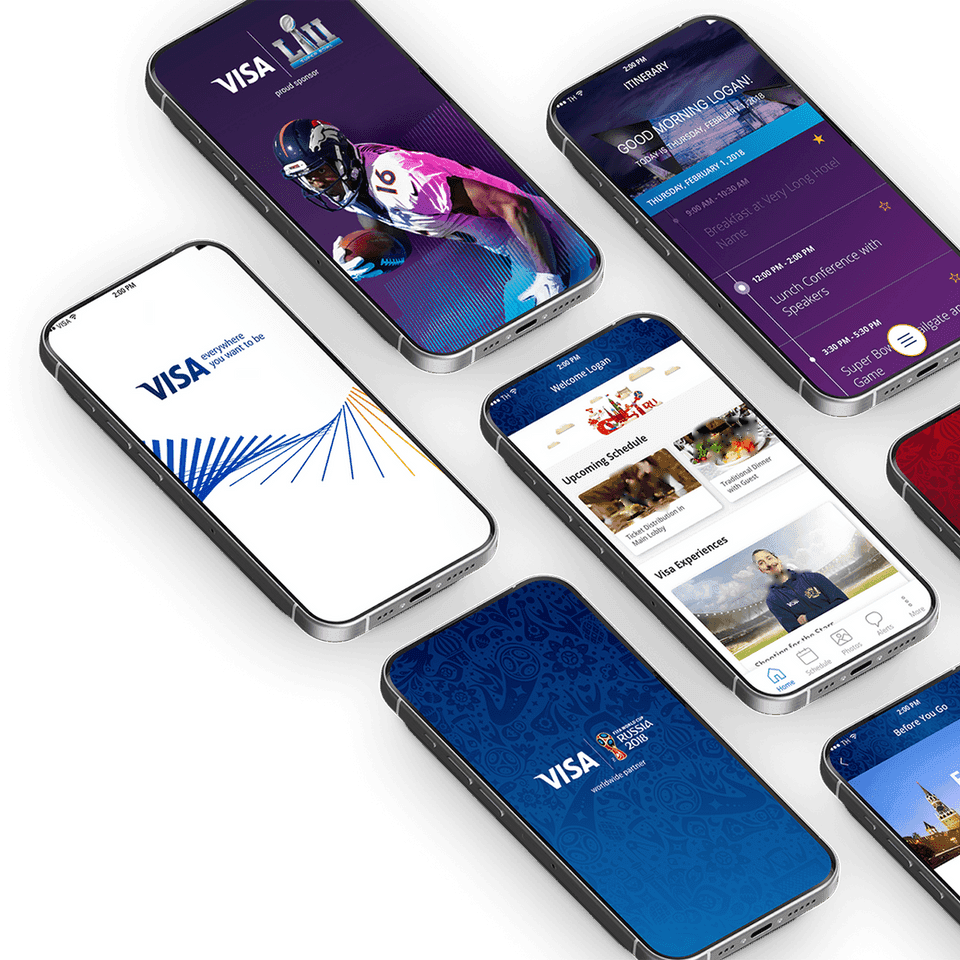
Visa Now helped clients, partners, and event guests navigate sponsorships, discover Visa Experiences, and personalize their schedules and itineraries.
I led visual design and contributed to UX across FIFA World Cup Russia 2018, Super Bowl LII, and the PyeongChang 2018 Winter Olympics, adapting a shared product for each event’s guests, brand, and context.
MY ROLE
Lead Visual Designer · UX
TEAM
Lead Product Designer Lead Visual Designer 2 UX Designers Product Engineering
TIMELINE
5 Months / Event
SKILLS
Visual design · UX design · Prototyping · Design systems
TOOLS



THE CHALLENGE
Make one app work for every event and every stakeholder
Visa Now began as an itinerary tool, but guests needed a fuller event companion: schedules, Visa Experiences, and ways to personalize what to do next. The app was underused and did not yet deliver the connected, premium experience Visa wanted.
Each sponsorship brought a new event identity, venue, and approval cycle. For PyeongChang 2018, Visa projected visitors would spend up to 50% more on their Visa cards than typical travelers, underscoring the importance of useful on-site experiences.
The product needed to grow across events without starting from scratch, within three constraints:
A distinct event identity and venue every time
About five months from kickoff to launch
Approvals from Marketing, Visa leadership, and the International Olympic Committee
MY ROLE
Lead visual design across the product lifecycle
As Lead Visual Designer with UX responsibilities, I set Visa Now’s visual direction and owned its design system from early concepts through release. I contributed to the core information architecture and helped shape how schedules, experiences, and itineraries worked together.
PRODUCT SCOPE
I focused the product on three guest needs: know what’s next, find relevant Visa Experiences, and keep a personal itinerary. Those needs became the through-line as the app moved from one sponsorship to another.
LEADERSHIP & DELIVERY
I mentored two UX designers in visual design and partnered with Product, Engineering, Visa leadership, Marketing, and event stakeholders. I brought trade-offs into the open, helped align approvals, and stayed close to build to protect interaction quality against fixed launch dates.
KEY DECISIONS
Four decisions that helped one app scale
Every five months brought a new event identity, venue, and approval cycle. These choices kept the core familiar and let each release improve.
Separate the core from the theme
I kept the core patterns and brand consistent, then layered each sponsorship’s identity on top, so every event felt distinct without starting from scratch.
Align teams around the guest experience
I made the trade-offs between guests, clients, partners, and Visa leadership explicit, so Product and Engineering could converge on one product.
Reuse before rebuilding
We extended the Olympics app for the Special Olympics instead of building a new one, and put the time saved into ratings and reviews.
Turn event feedback into the next roadmap
I fed attendee feedback into each next release, prioritized against fixed launch dates, so the app kept improving instead of resetting every event.


THE SOLUTION
One product, tailored to every sponsorship
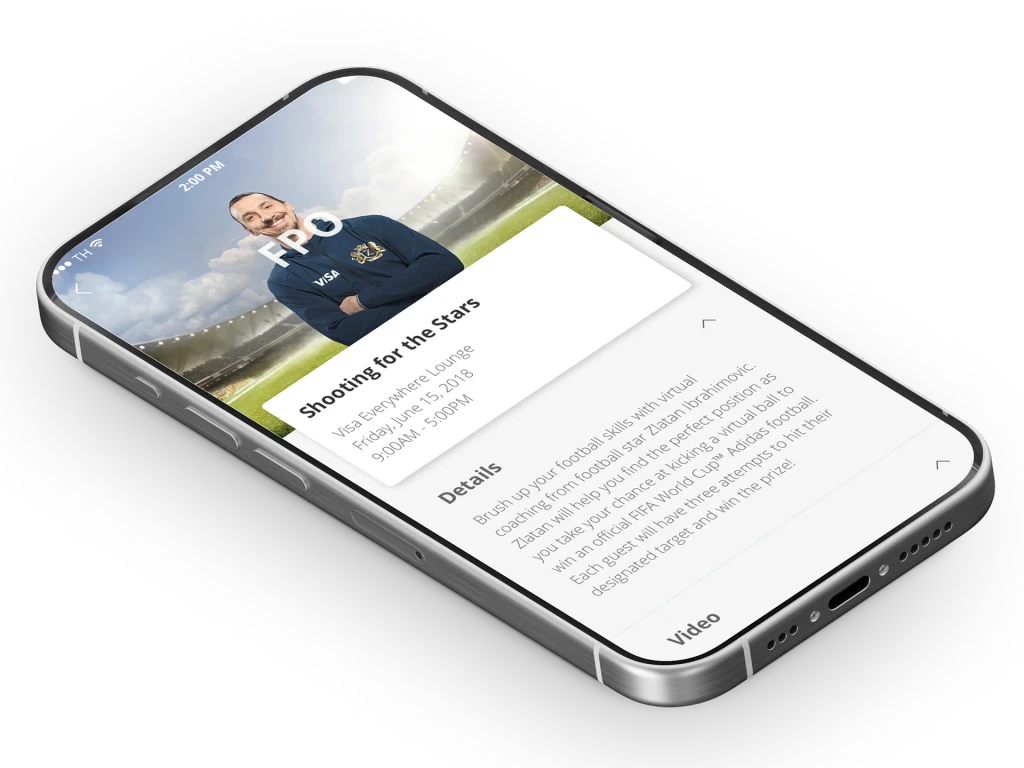
A shared product core brought schedules, Visa Experiences, event details, and personal itineraries together. Each sponsorship layered its visual identity and local context onto that foundation, keeping familiar patterns intact while making the event feel distinct.


OUTCOME & IMPACT
A stronger event experience, with measurable gains
Across the Super Bowl, FIFA World Cup, and Olympic sponsorships, Visa Now supported improvements in participation, event understanding, self-service, and guest feedback. Attendees also told us the app made the events easier and more enjoyable.
25%
Higher attendance at events and social gatherings.
60%
Improvement in guests’ understanding of scheduled events.
40%
Less support time, as guests found information themselves.
75%
Increase in event ratings and user comments.


REFLECTIONS
Design for the next event, not just this one
Each sponsorship brought pressure to start over, but the bigger opportunity was building a foundation that could flex. Shared patterns, clear trade-offs, and a steady attendee feedback loop helped a small team improve the product on tight timelines. The lesson I carry forward: good systems do more than make today consistent; they make the next team faster and the next decision clearer.


