Optimizing Small Business
A research-based framework connecting small business needs to Visa’s capabilities, reused across advisory engagements, RFPs, and product planning.

OVERVIEW
Make the entire journey visible.
As Lead Designer, I shaped the framework end to end, turning research into connected personas, journeys, and service blueprints, and aligning Product, sales, and consulting teams on where Visa’s capabilities fit small business needs.
MY ROLE
Lead Designer
TEAM
Design, Product, Visa Business Solutions, Visa Consulting & Analytics, subject matter experts
TIMELINE
8 weeks
SKILLS
Service design · Research synthesis · Journey mapping
TOOLS


THE CHALLENGE
Connect Visa’s capabilities to how small businesses really work
Goals
APPROACH
What small businesses told us
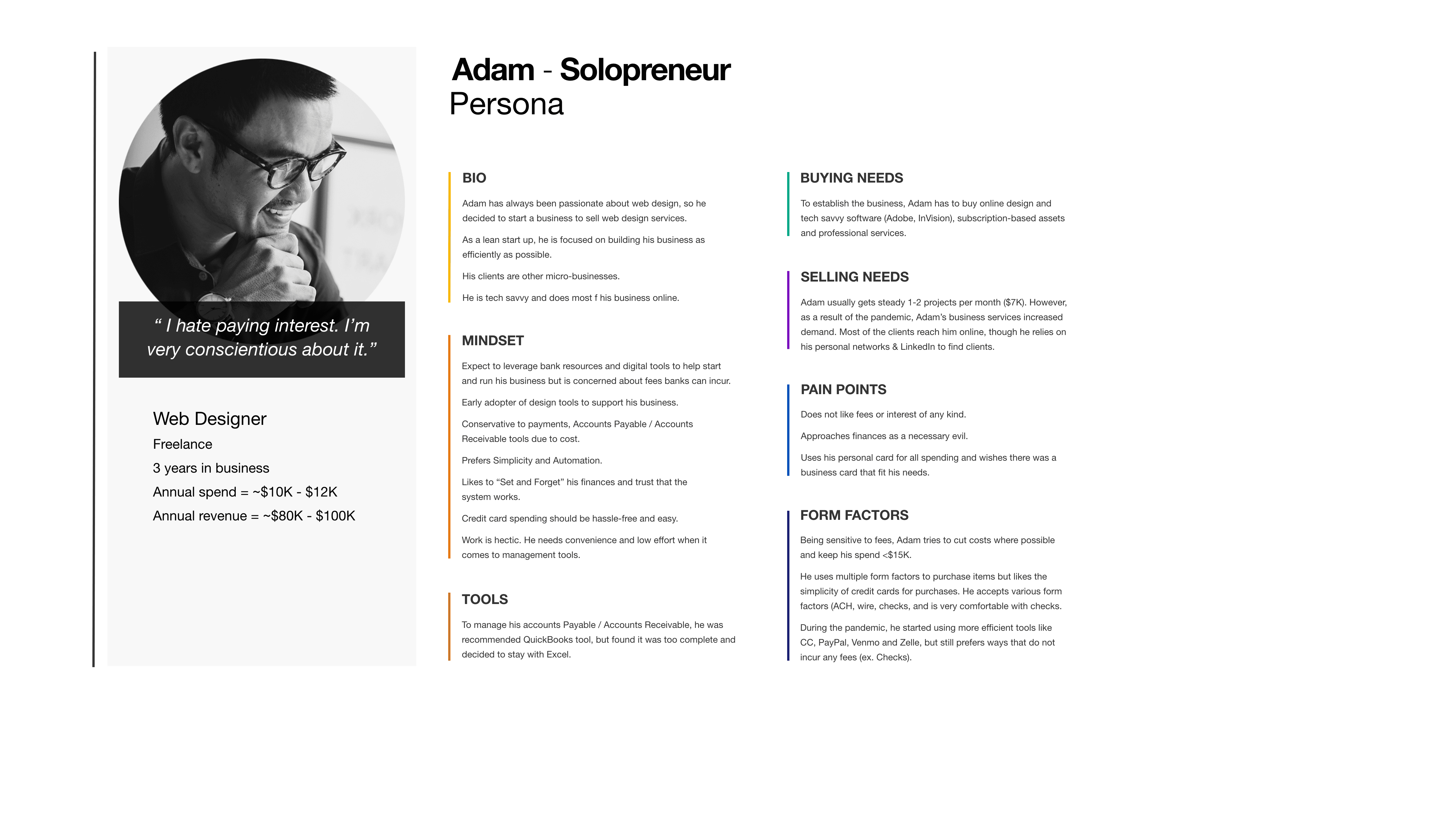
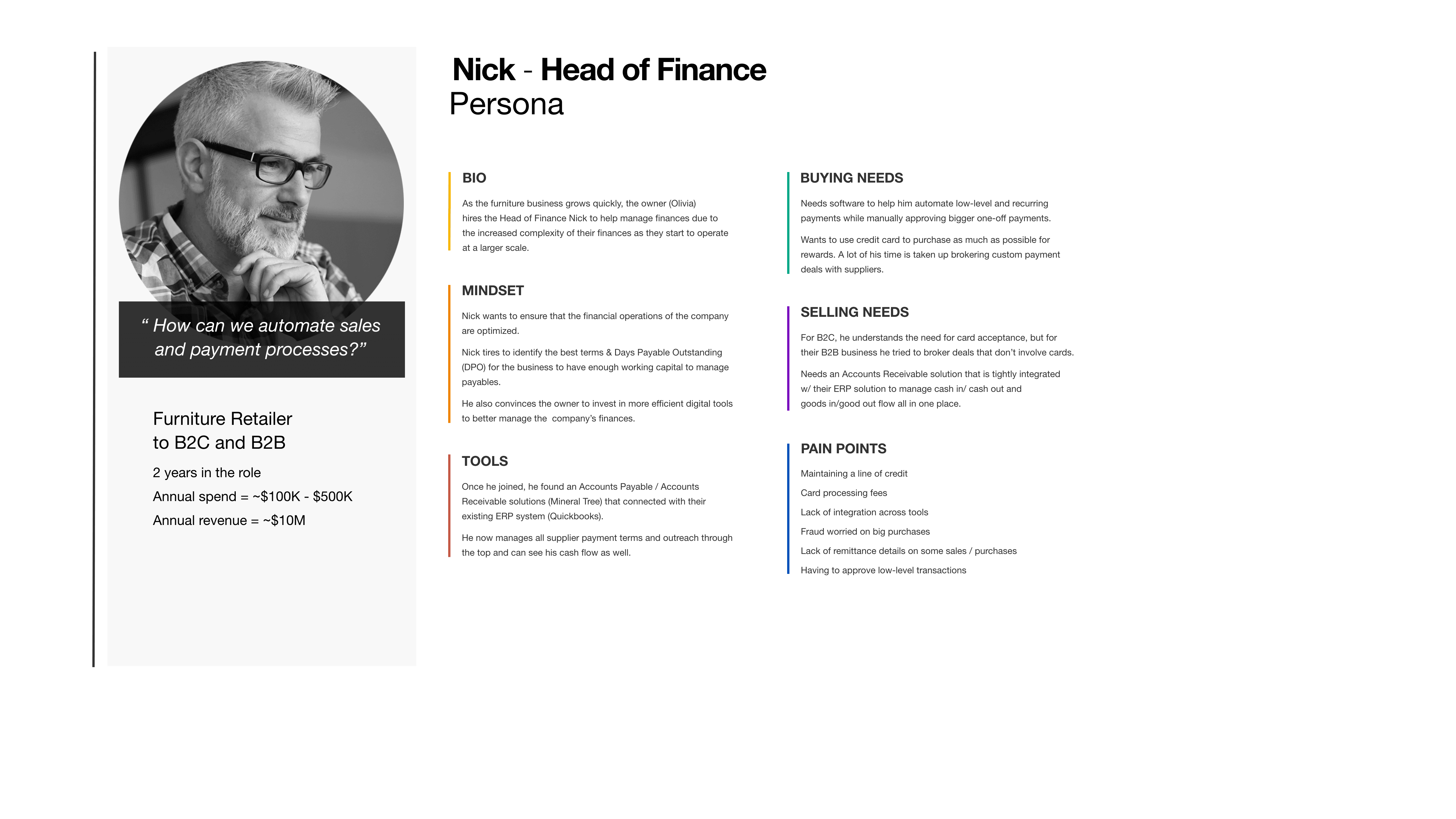
Using a human-centered design approach, Innovation & Design, Visa Business Solutions, and Visa Consulting & Analytics distilled research from six client engagements over the prior year into one customer view. We modeled three operators across a range of scale, from a solopreneur earning about $100K a year to a $10M retailer with a dedicated head of finance. Three patterns came through.
Fees shape every payment choice
“I hate paying interest. I’m very conscientious about it.”
ADAM, SOLOPRENEUR PERSONA
Manual work fills the gaps
“How can we automate sales and payment processes?”
NICK, HEAD OF FINANCE PERSONA
Growth outpaces their tools
“With all the additional business we have gotten recently, I need better tools to streamline my business.”
OLIVIA, ESTABLISHED ENTREPRENEUR PERSONA
THE FRAMEWORK
Inside the mindset of small businesses
Eighteen connected artifacts, each answering a different question about how small businesses buy, sell, and where Visa fits.
3
personas
9
user journeys
6
service blueprints
01 · PERSONAS
Three operators, three sets of needs
Research-based personas captured what motivates small business operators and where they struggle, from a solopreneur paying contractors to an established business’s head of finance. They gave every team the same picture of who we were designing for.

02 · USER JOURNEYS
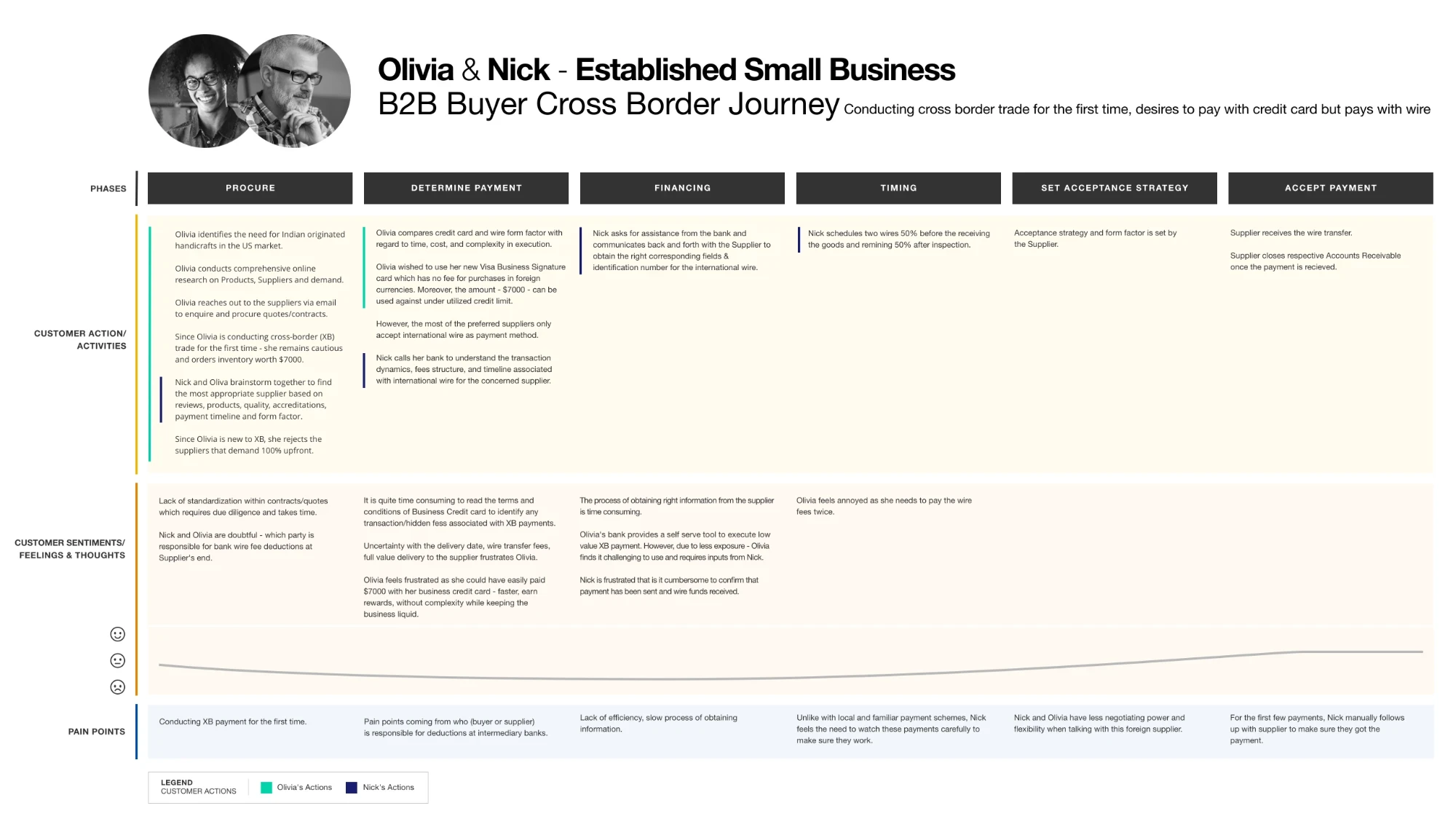
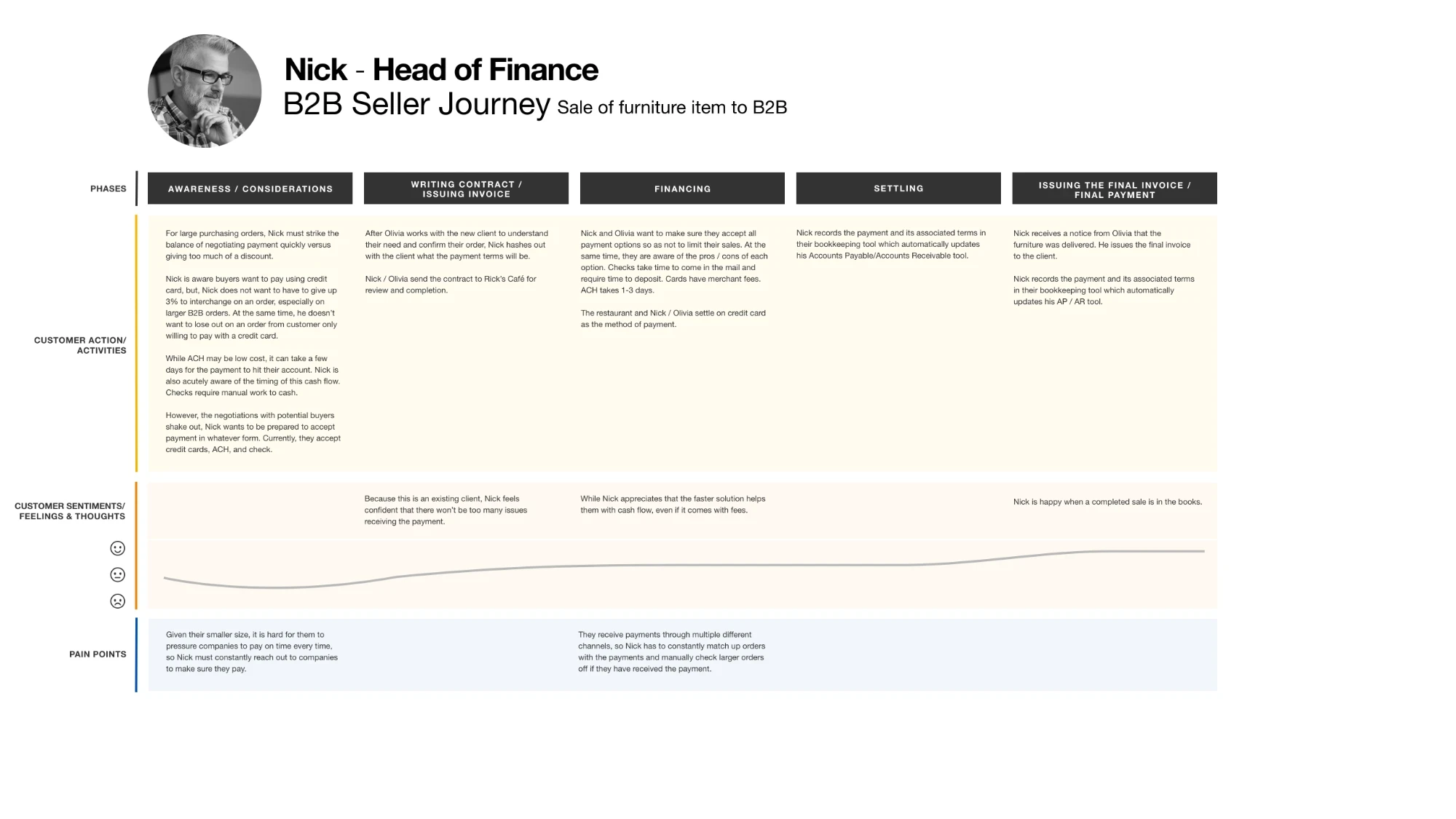
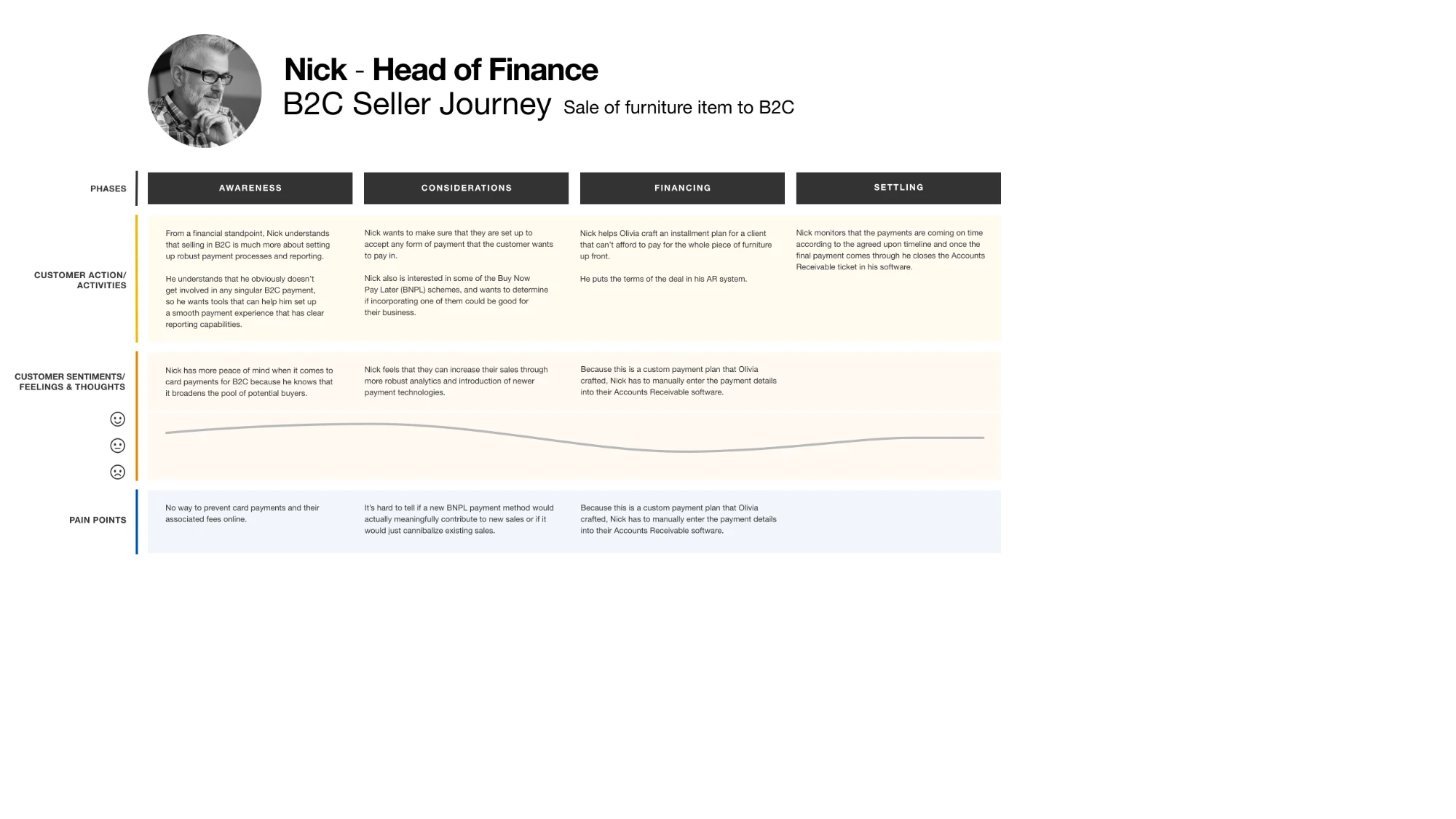
Mapping the full buying and selling experience
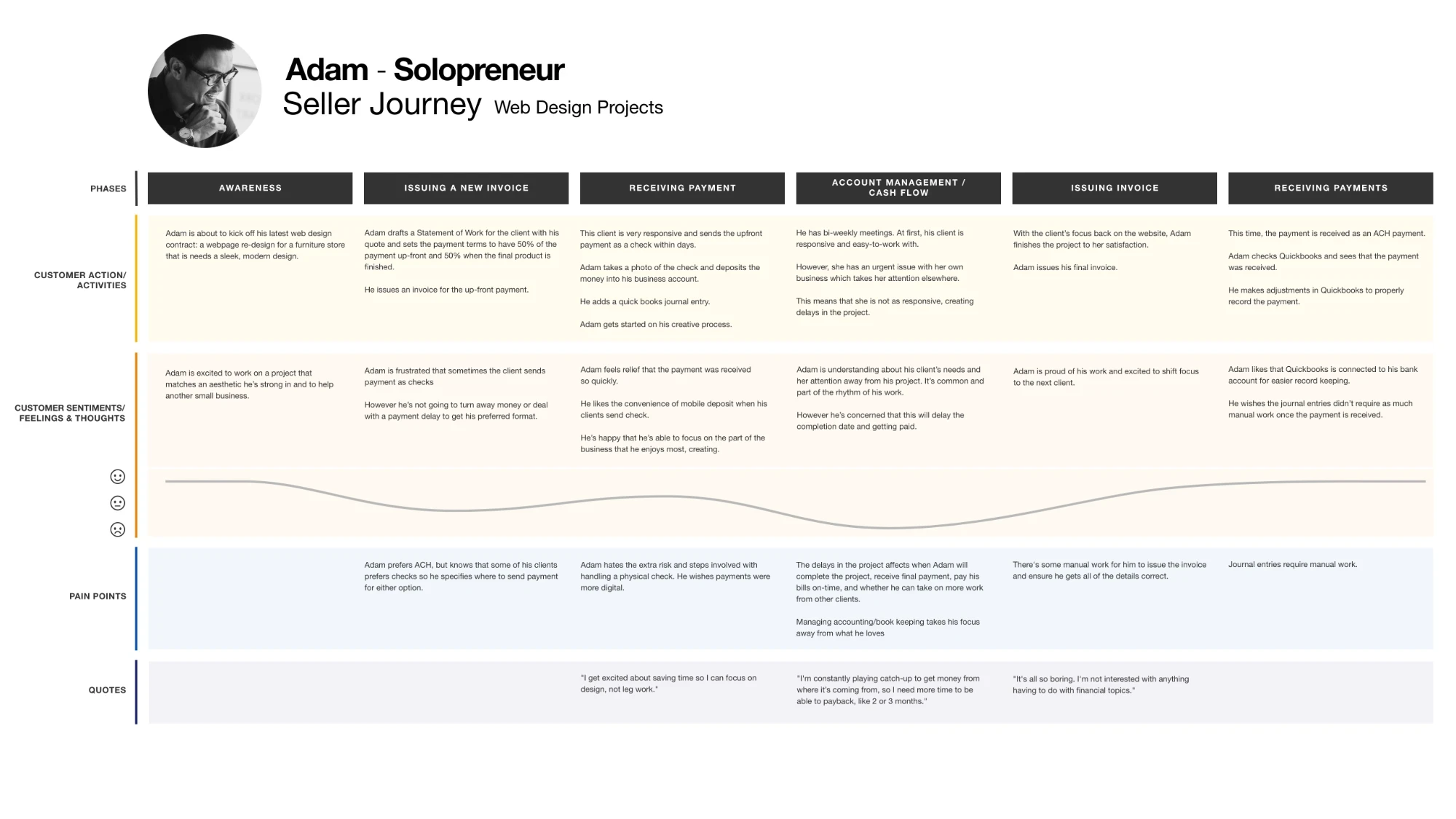
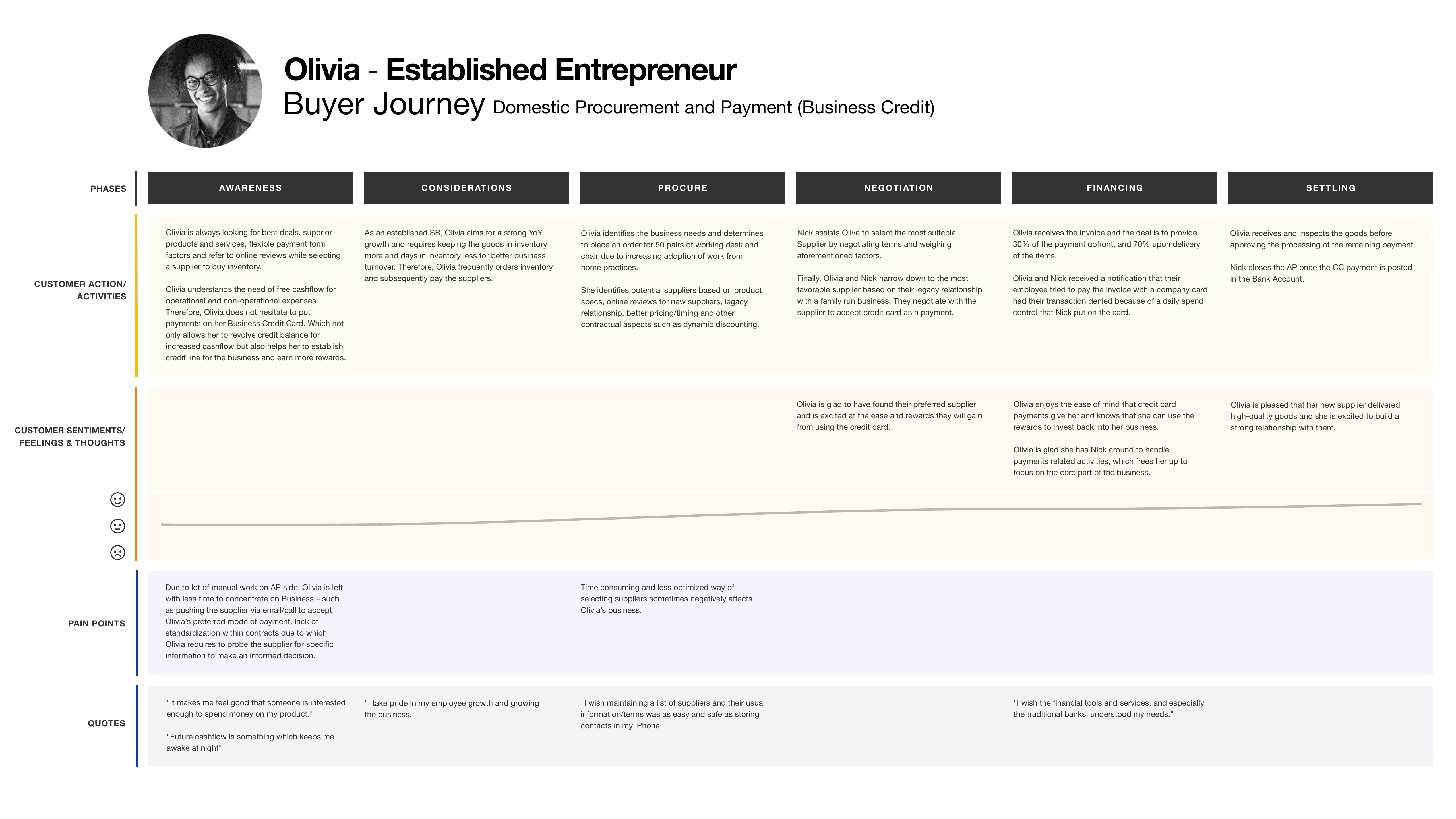
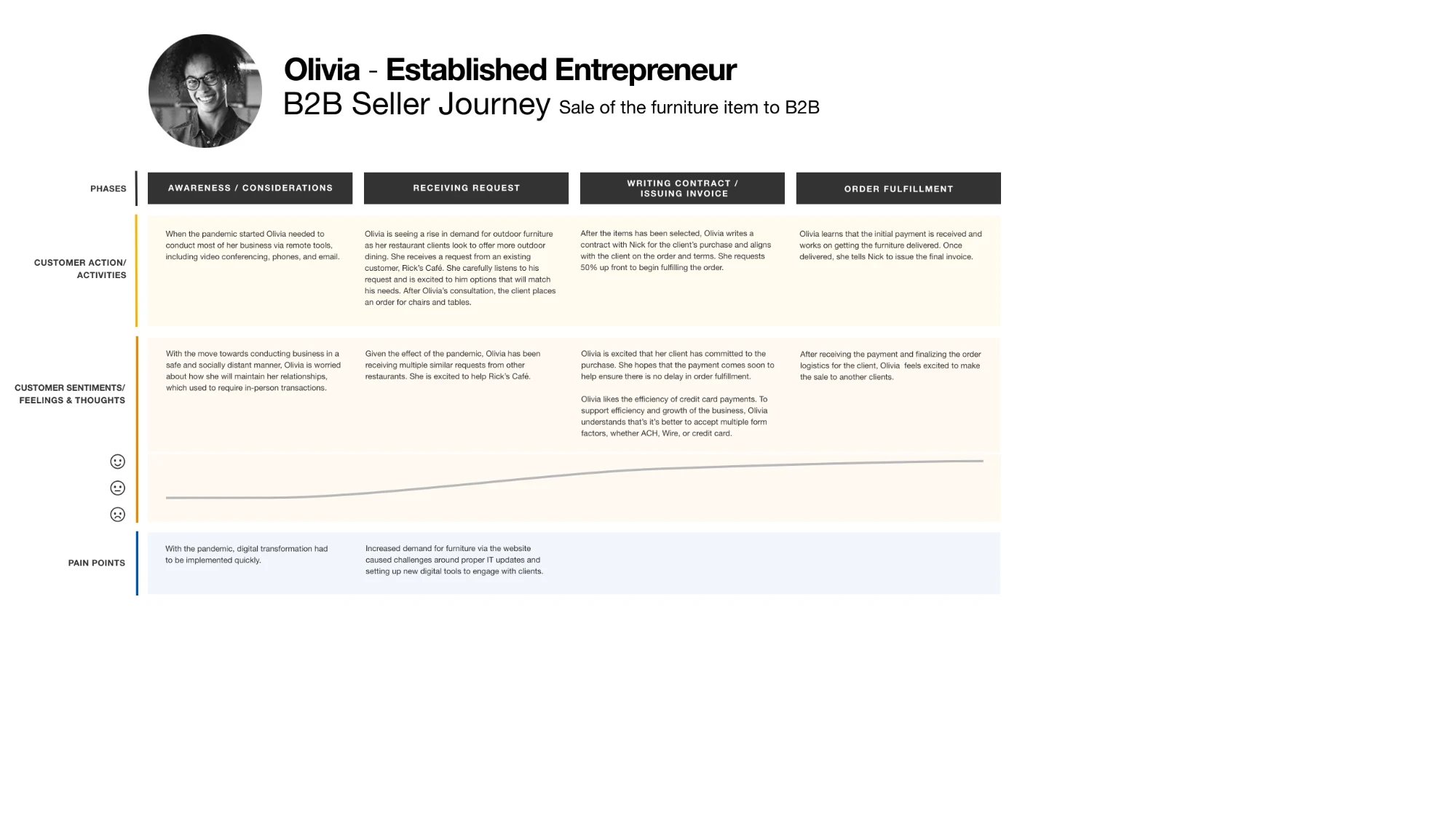
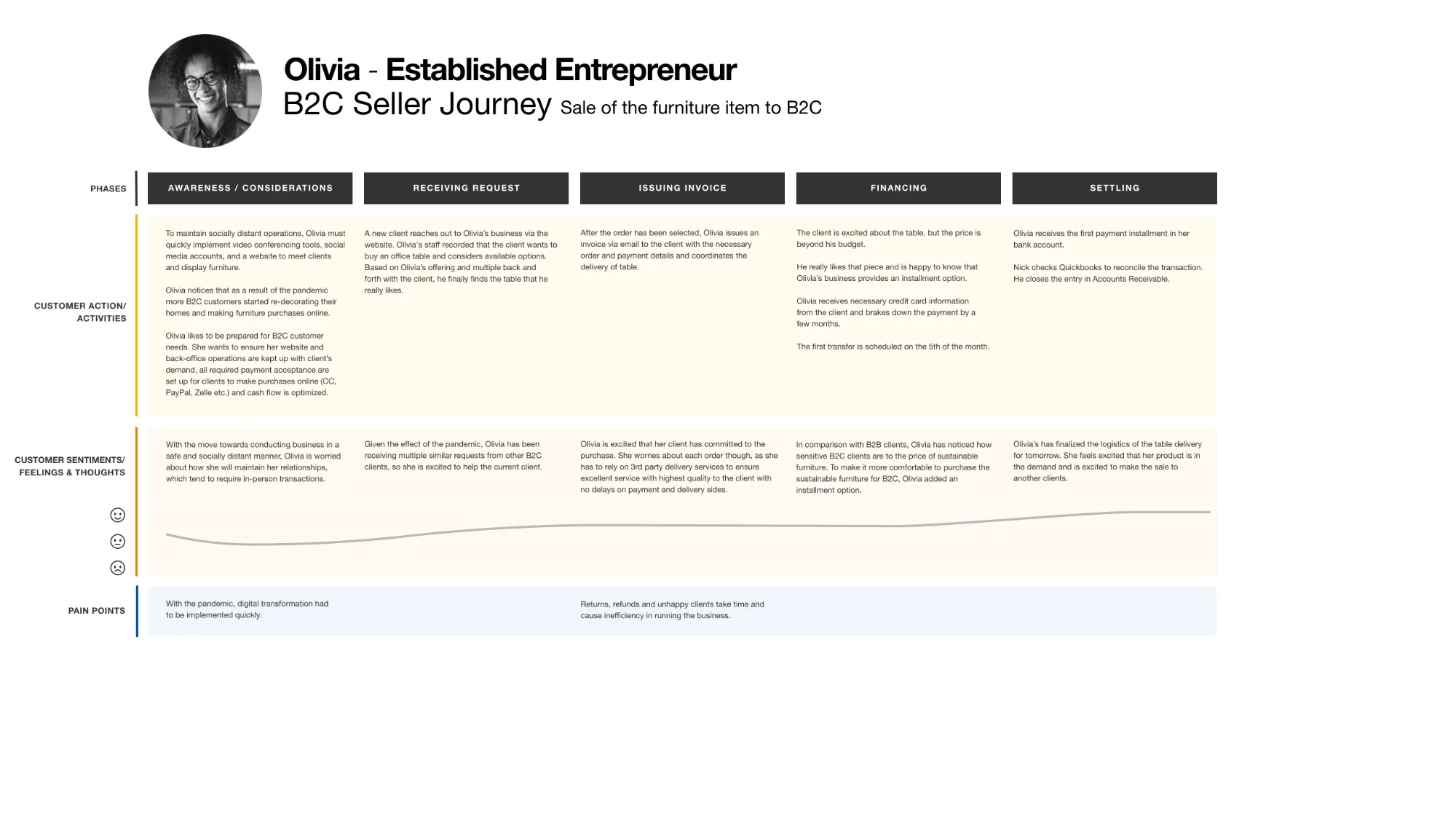
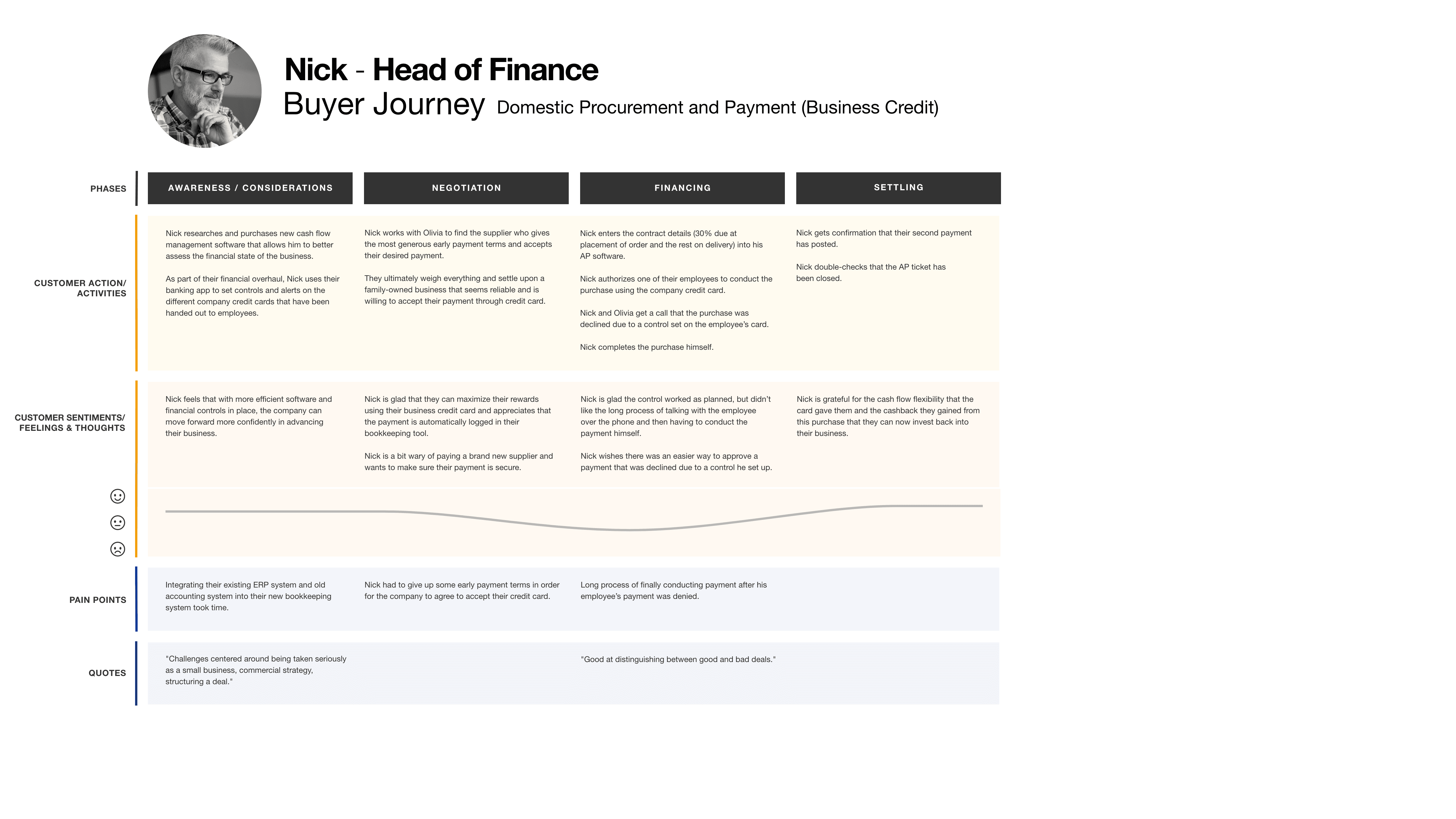
Each journey follows a customer from awareness through motivations, actions, and pain points, instead of a single transaction. Mapping the whole experience showed where friction builds and where Visa could step in.

03 · SERVICE BLUEPRINTS
Turning customer moments into Visa opportunities
Service blueprints connected each journey to the people, props, and processes behind it. Layering Visa’s capabilities onto those touchpoints revealed where products already worked end to end, and where gaps pointed to new products and partnerships.

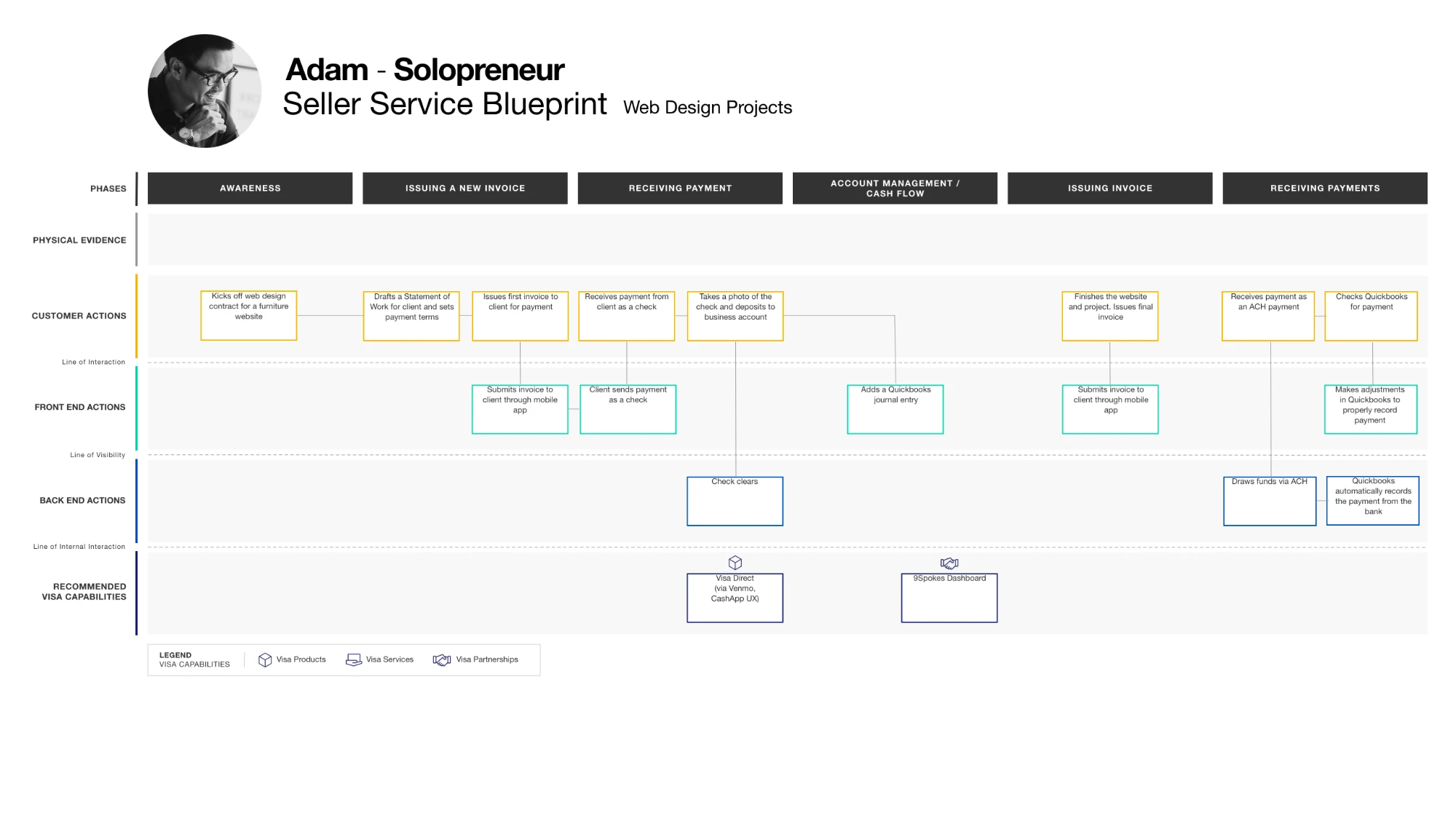
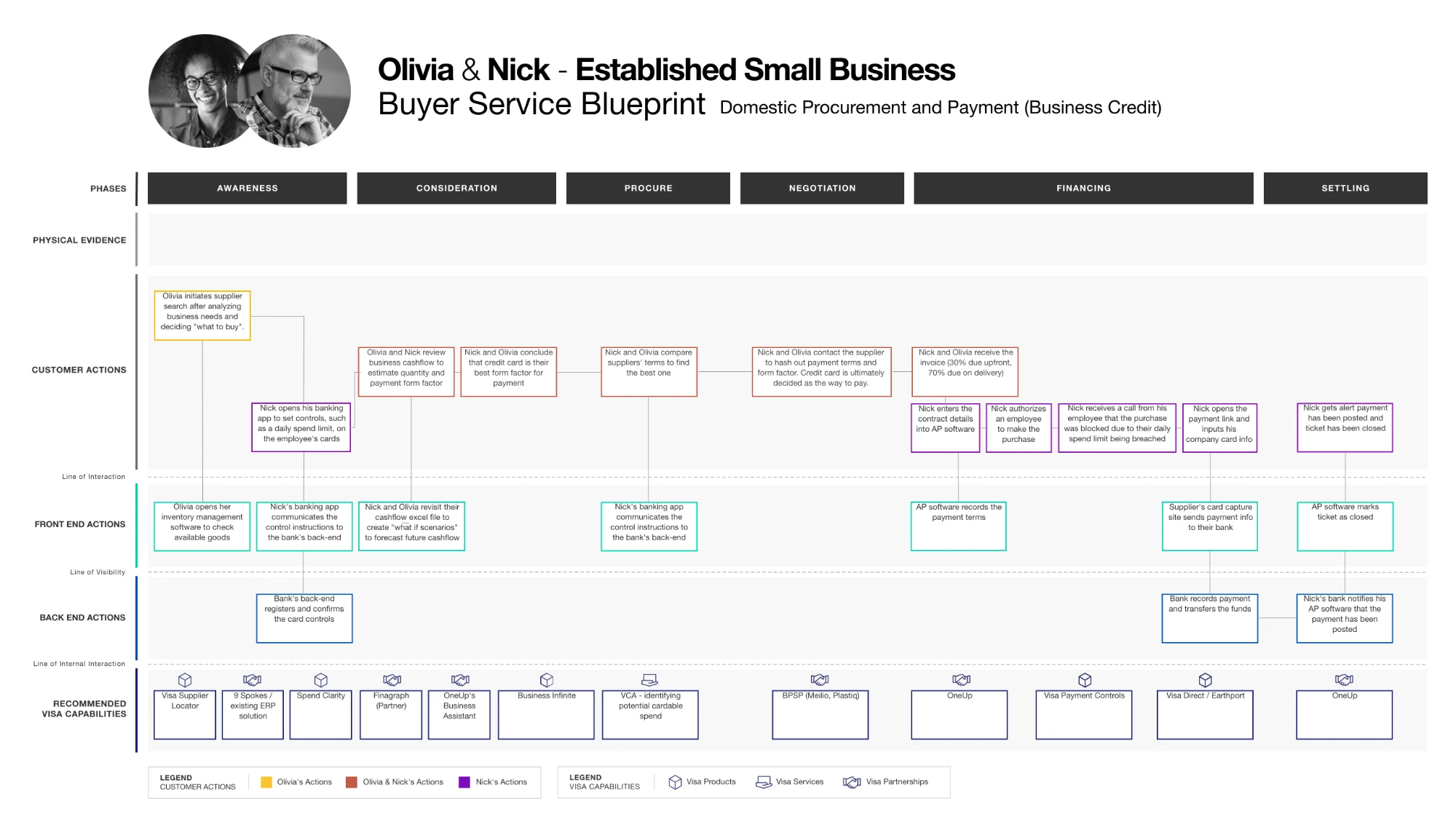
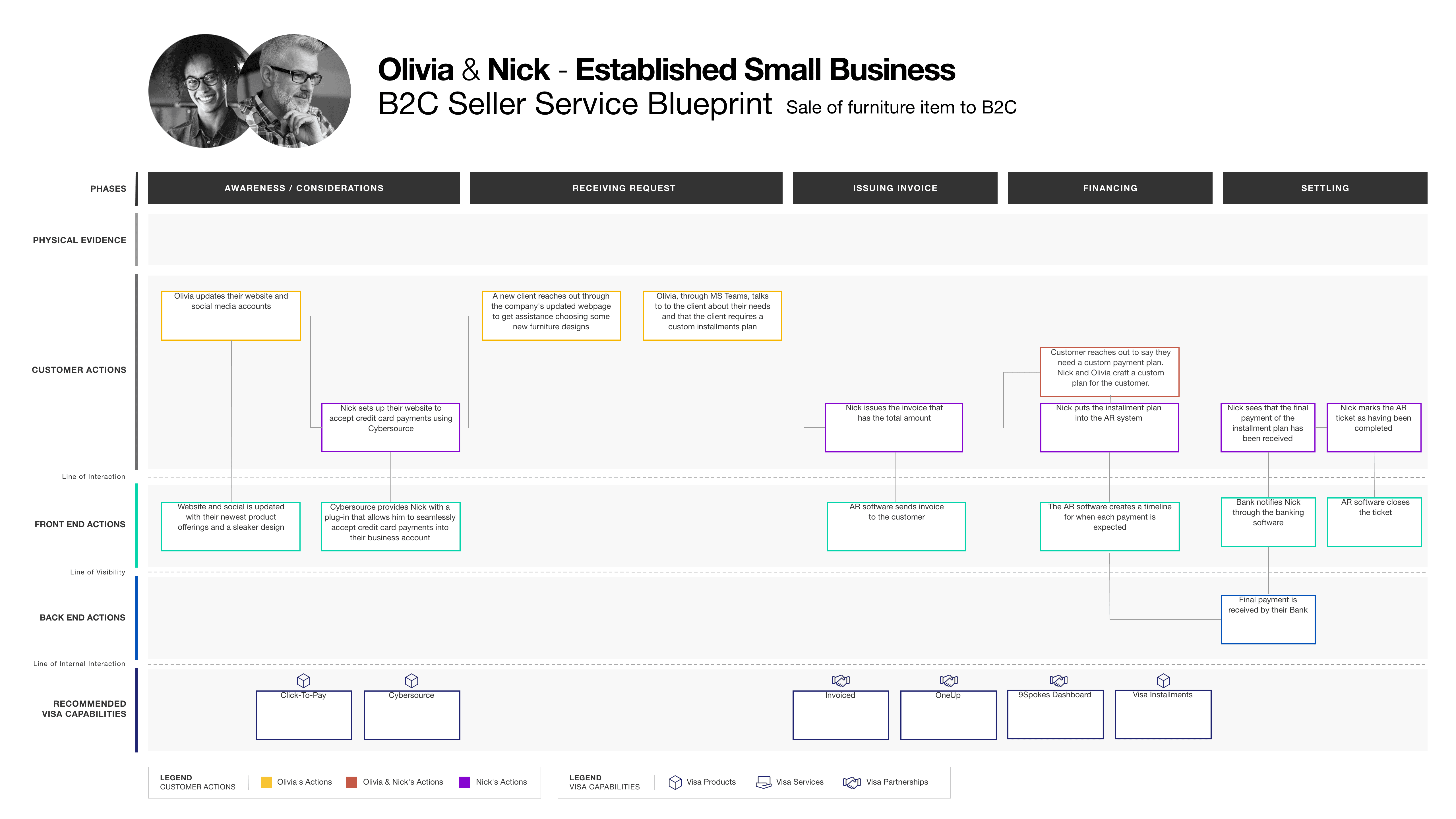
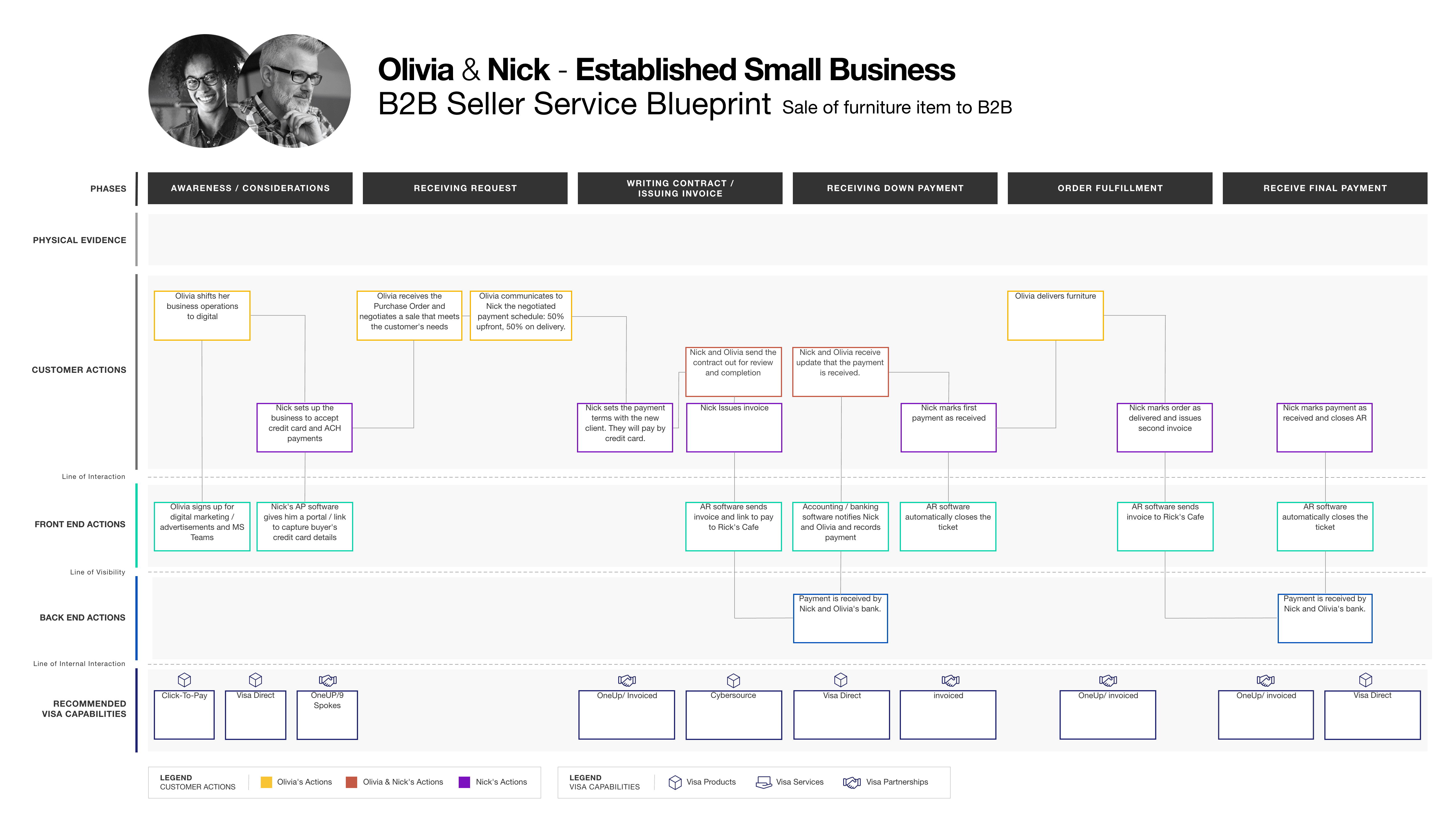
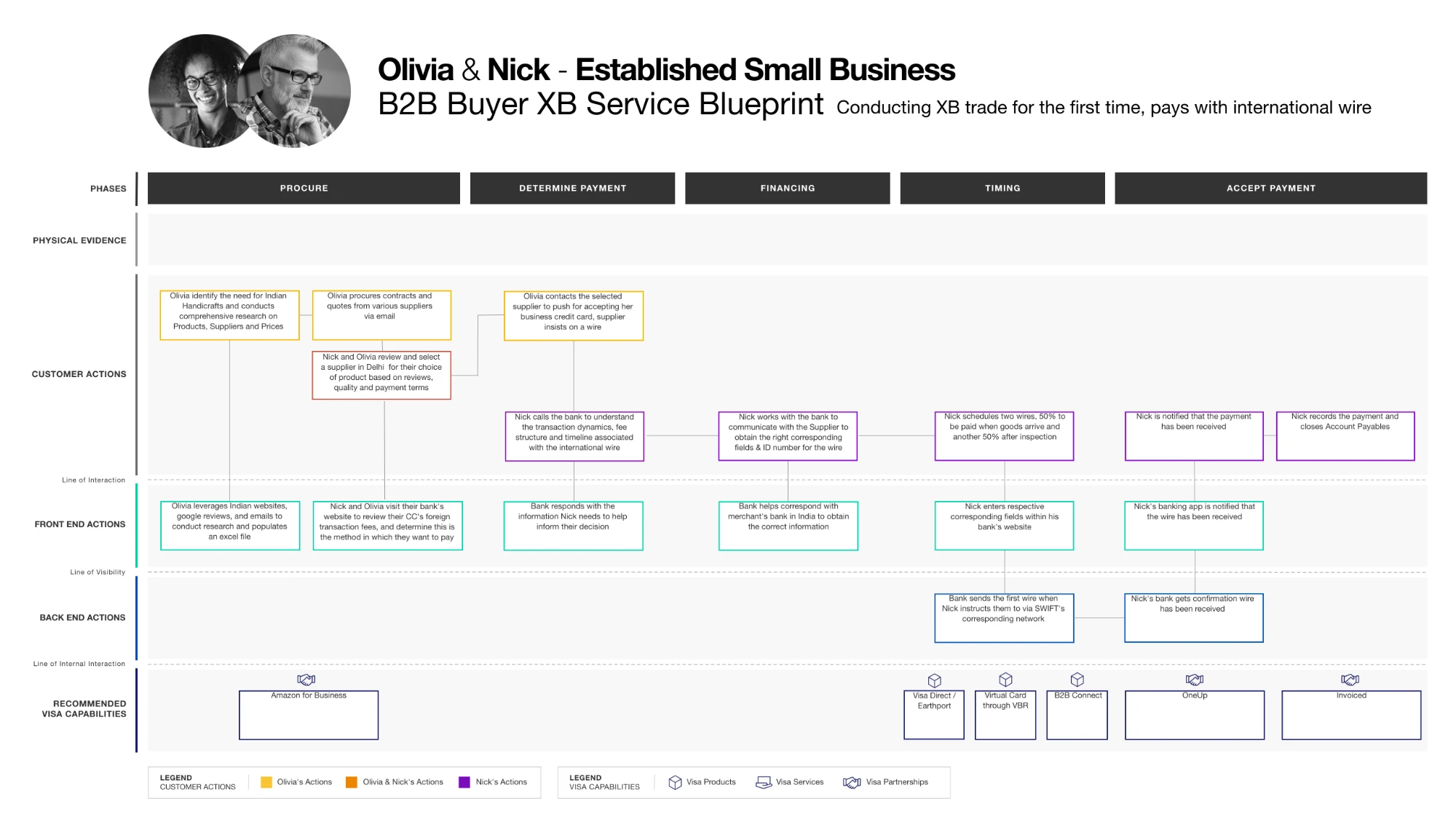
Example: Adam pays a contractor
One blueprint turned a frustrating payment into three openings for Visa.
PAYING A VENDOR
→ Visa Direct
VISA PRODUCT
PAYING A VENDOR
→ Business Payment Solution Provider (Plastiq)
VISA PARTNERSHIP
ACCOUNT MANAGEMENT
→ 9Spokes dashboard
VISA PARTNERSHIP
KEY DECISIONS
Four decisions that made the work reusable
The goal wasn’t a one-time deck. These choices turned research into a system teams could keep using.
Start from the customer, not the catalog
Framing Visa’s capabilities inside real small business moments showed where products solved real needs, instead of listing features.
Connect the artifacts into
one system
Personas, journeys, and blueprints build on each other, so a team can move from who the customer is to exactly where Visa fits.
Design it as a living document
A modular format let teams add capabilities and journeys as Visa’s offerings grew, instead of starting over.
Map every type of Visa capability
Blueprints called out Visa products, services, and partnerships separately, so sales, consulting, and partnership teams could each see their part in the solution.
IMPACT & OUTCOME
A shared playbook for selling to small businesses
The framework became a shared reference across Visa Business Solutions, Visa Consulting & Analytics, and Innovation & Design, and it answered each goal. Designed as a living document, it grows with Visa’s capabilities.
Faster project delivery
Sharper business development
Clear growth direction
One customer truth
REFLECTIONS
Research scales when it’s built to be reused
The biggest return didn’t come from any single artifact, but from connecting them into one system teams could pick up without starting over. Next time, I’d build in a way to track where the framework gets used, so its impact is measured, not just felt.